
The El Paso County Court Calendar
The Colorado Judicial Branch Docket Search is the free, official hearing calendar for El Paso County District Courts. It covers County Courts too. It lists what is scheduled at the state courthouse. That is all it does. No charge details, no pleadings, no orders, no document images, and no final outcome appear there. Those items live in the register of actions or case file the clerk holds. The official calendar page displays its own search controls clearly.
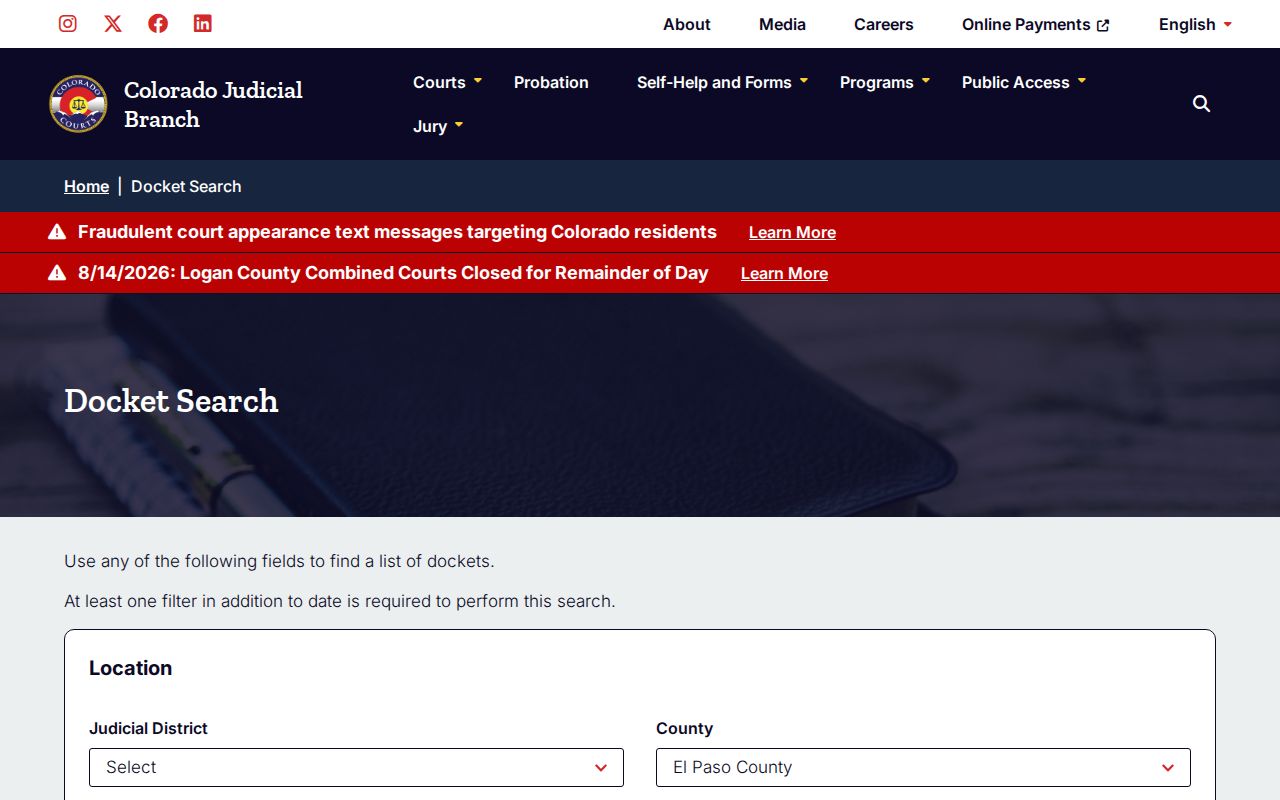
Filters on the form cover court, date, case, party, and attorney. Remember the output is a schedule. It is not an official copy of the whole court record. Municipal dates sit elsewhere. Colorado Springs, Fountain, Monument, Manitou Springs, and Palmer Lake each keep their own ordinance calendars or clerk channels. Palmer Lake is no exception. Read the court name and address printed on the citation. A city hearing may never show up in the state calendar at all.
El Paso Calendar Search Fields
The state search needs at least one filter beyond the date itself. Pick El Paso County. It appears as county value 21. The courthouse filter will then point to the El Paso County Judicial Building. "Specific Date" opens a date picker, yet one more filter is still required. Too many matches? More than 5,000 hits may come back. The tool then asks you to narrow things down. A tighter date range, a court type, a division, or a case class usually fixes it.
| Field | Type | El Paso calendar use |
|---|---|---|
| Judicial District | Dropdown | Select the 4th Judicial District. |
| County | Dropdown | Select El Paso, value 21. |
| Court Type | Dropdown | Choose Both, County, or District. |
| Division | Text | Use the number or letter on the latest notice. |
| Date Range | Dropdown | Six months, three months, one month, one week, today, or a specific date. |
| Case Number | Three fields | Four-digit year, class, and one-to-six-digit sequence. |
| Party | Conditional text | Individual first and last name or business name. |
| Attorney | Conditional text | Name or one-to-six-digit bar number. |
Case classes run from C, CR, CV, and CW through DR, JD, JV, M, PR, R, S, and T. Older case numbers may display a two-digit year even though the search field wants four. Type the number exactly as a current court paper shows it. If nothing returns, try the full four-digit year.
How to Find Your Court Date
Searching by case number is the fastest online route to an El Paso County hearing. No number in hand? Use a full party or attorney name. Pair it with El Paso County, the right court level, and a short date range. Whatever appears, check it against the newest notice you received. Online access can fail. The Combined Court clerk, the assigned division, and the in-person records counter are still there. A paid authorized ROA vendor can offer deeper history, though it is not the official record.
- Read the summons, Notice of Hearing, bond paper, or order to identify state or municipal court.
- Search the official state calendar by full case number and a sensible date window.
- If no number is known, combine a party or attorney filter with county, court type, and short dates.
- Print or export the matching result and compare its time, room, mode, and hearing type with the newest notice.
- Call the assigned division or the clerk at 719-452-5000 when a reset, mode, or courtroom remains unclear.
- Visit the Room S101 counter or request the ROA and Notice of Hearing when the online calendar cannot resolve the conflict.
For records in person, go to Room S101 at 270 S. Tejon Street, weekdays from 7:30 a.m. to 4:30 p.m. Every third Wednesday in 2026 brings an earlier 3:30 p.m. close. Record questions reach the clerk at 719-452-5490 or 04ResearchRequest@judicial.state.co.us. If timing matters, call before you travel.
El Paso Calendar Result Fields
Results show Date, Time, Duration, Name, Case Number, Hearing Type, Location, Appearance Type, and Courtroom. Export Results and Printable Version are working options, and pages hold 20 rows each. No document-download button exists. A printout helps with logistics. It does not replace a filed notice or the assigned division's current instruction.
| Date and time | The listed start of the proceeding; confirm after any reset. |
|---|---|
| Duration | The calendar’s expected block, not a promise of exact start or end time. |
| Hearing type | Examples include Arraignment, First Hearing, PreTrial Conference, Setting, and Show Cause Hearing. |
| Appearance type | IN PERSON, TELEPHONE, or VIRTUAL as displayed. |
| Location and courtroom | The building and assigned room or division for the scheduled event. |
| Case number | The year, class, and sequence used to distinguish the matter. |
The El Paso judges and staff roster supplies current division contacts.
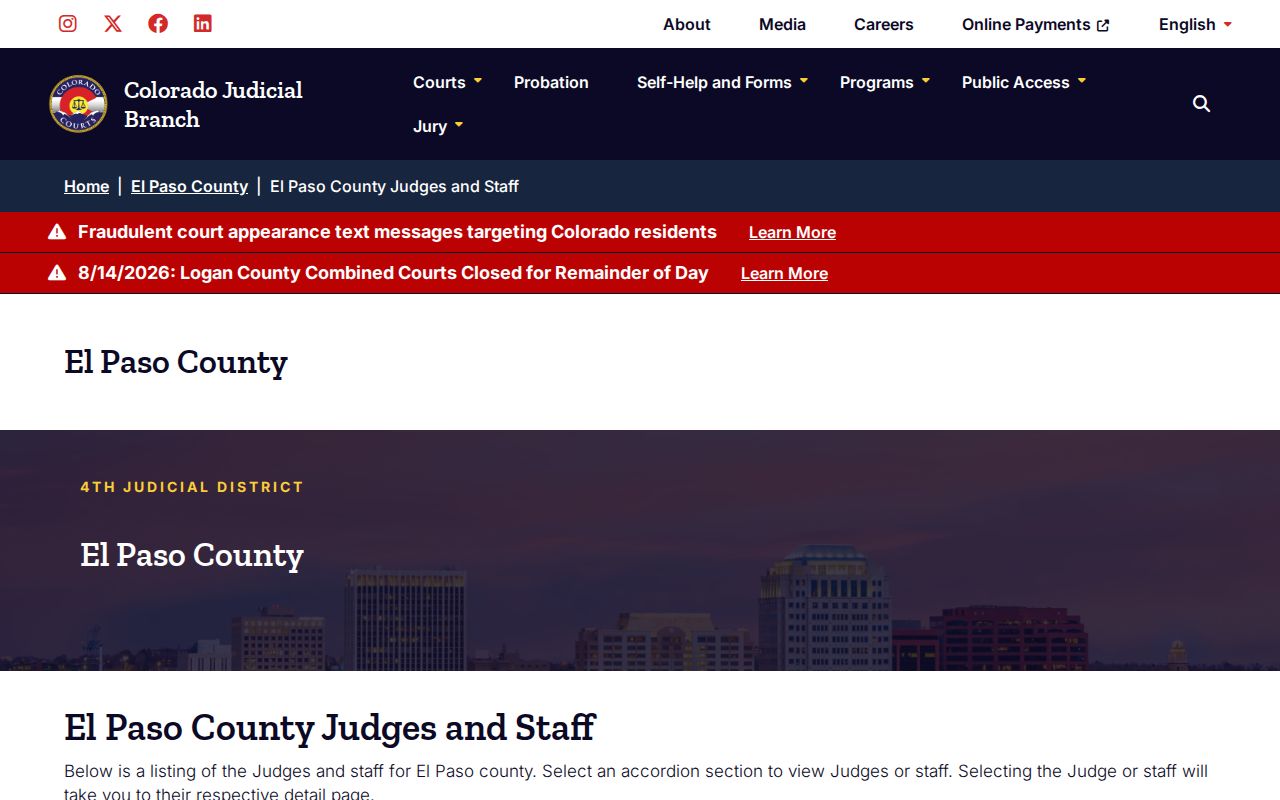
Once the calendar shows a division's number or letter, the live roster is the right place to find that division's phone.
Reading a Court Setting
A setting is just a scheduled court event. It is not necessarily a trial or any final decision. Arraignment is the formal plea stage. Appearance of Counsel records attorney involvement. A First Hearing is simply the initial proceeding. A PreTrial Conference deals with status or trial preparation. Show Cause Hearings ask a party to explain compliance or noncompliance. A motions hearing takes up filed requests for a ruling. The labels stay short, so context comes from the case type and the latest order. A "Setting" may exist only to schedule later action. "Continuance" or "reset" means the court moved the event. A plea-disposition setting might resolve a case. The result must be confirmed in the disposition or sentence order. A probation-revocation return addresses an alleged violation, not a new charge.
- Bonded advisement
- A custody setting about charges and rights.
- Preliminary hearing
- A probable-cause proceeding where applicable.
- Minute order
- A brief official notation of court action.
- Notice of Hearing
- The filed notice stating the actual hearing date and time.
- Continuance
- A move to a later date, not a dismissal.
El Paso Court Setting Appointments
A local setting appointment is not a court appearance. In domestic, juvenile, District Civil, and probate matters, local schedules provide an appointment. It comes at least two weeks after filing. The filer submits Notice to Set JDF 1123. The filer then calls the division at the appointment time. The division gives the true hearing date. The filer files Notice of Hearing JDF 1124. The official El Paso forms and procedures page spells out those local instructions.
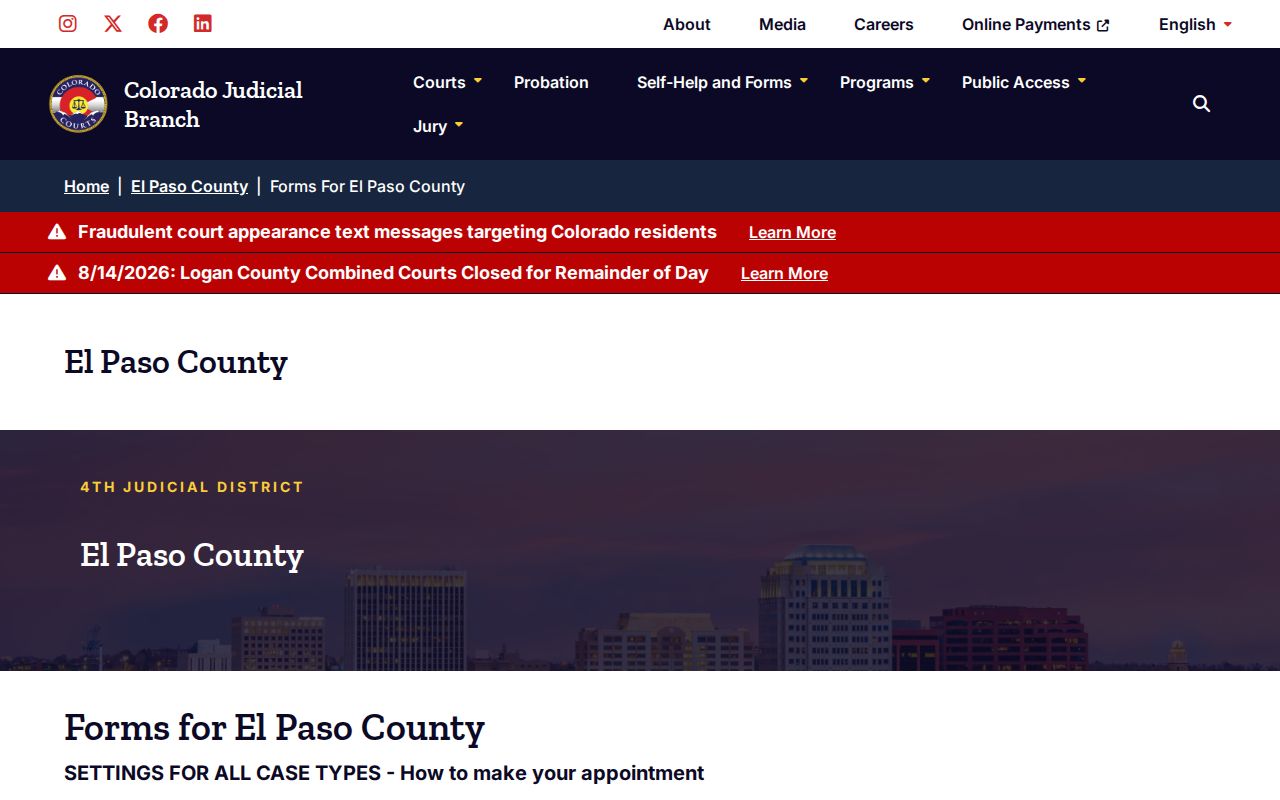
Knowing the difference prevents a costly mix-up. The setting appointment arranges the hearing, and the later Notice of Hearing states when the court will actually hear it. Probate relies on JDF 710, 711, or 712. Uncontested or default domestic final orders use FCF 1015. Forms and division practice change, so trust the current local page and a call to the assigned division over any old date.
Resets, Continuances, and Cancellations
A reset simply slides a hearing to a new date. The case itself stays open. Older calendar listings can linger after a judge signs a new order, so trust the newest minute entry, order, or Notice of Hearing over a stale court calendar line. When an online field and a filed notice conflict, call the assigned division rather than assuming the later search result wins legally.
Each El Paso County division adds its own rules. Division J runs a trailing criminal docket where many cases sit under one listed time, and you must appear in person unless Webex gets approved ahead of time. Division DST holds bonded advisements on Fridays at 10:00. Division 22 permits remote attendance for some represented procedural matters, yet unrepresented first appearances, guilty pleas, contested motions, and preliminary hearings actually heard all require you in the courtroom.
Confirmation chain: Calendar → newest ROA or minute entry → assigned division → filed Notice of Hearing.
Note: Court staff can confirm a hearing date, but only the judge or an authorized order can grant a continuance.
El Paso Court Appearance Modes
An El Paso County calendar entry may mark a setting IN PERSON, TELEPHONE, or VIRTUAL. That label is only a clue about routing. Confirm the division's current order and its access instructions before you rely on it. Getting a Webex link, in other words, does not by itself give you permission to appear that way. Watching a public stream or listening to court audio counts as observation only. Neither one is a legal appearance in the El Paso County court docket.
| Calendar label | What to verify | Reliable source |
|---|---|---|
| IN PERSON | Building, courtroom, start time, and security arrival | Notice plus division |
| TELEPHONE | Dial-in details and whether advance approval is required | Filed order or division |
| VIRTUAL | Approved platform, link, display name, and attendance rule | Division instructions |
| Public stream or audio | Observation rules and recording ban | Court’s public access page |
City programs sit apart from state court, and that includes remote options. The Colorado Springs remote disposition process is a narrow city procedure. It handles only qualifying municipal cases, as that page explains.
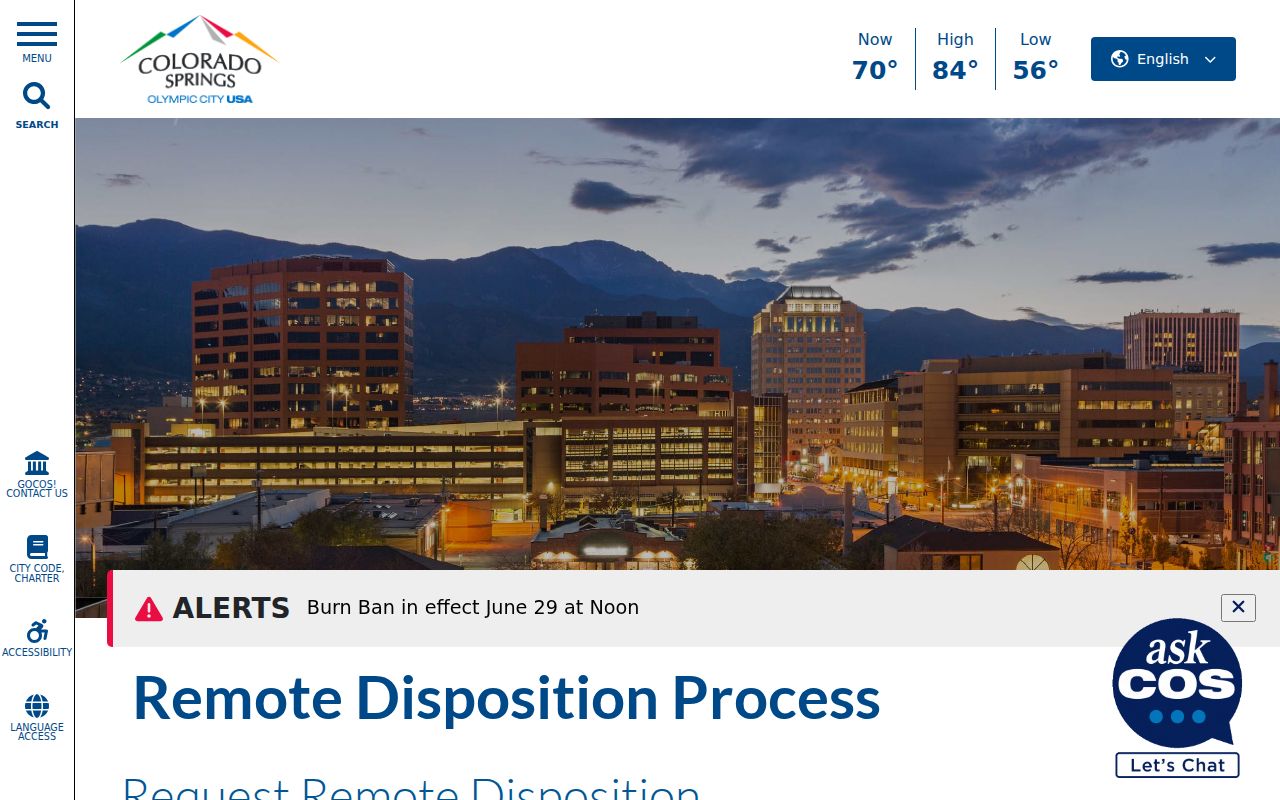
Do not treat the city process as a back door into county matters. It cannot authorize remote participation in an El Paso County Combined Court case. It is also not a general calendar portal for the court docket.
What To Do If You Miss a Setting
Move fast if you miss a setting. Start with a docket search of the current El Paso County calendar, read the newest entry, and call the assigned division. No division listed? Call the Combined Court main line at 719-452-5000. Ask what order was entered, whether a new court date was set, and how to get the minute order or Notice of Hearing. Court staff can explain process and schedule details, but they cannot undo a consequence or hand out legal advice.
Do not wait for the calendar to change. A missed criminal or traffic setting may lead to a warrant or other court action, while a missed civil event may result in default, dismissal, or an order entered without the absent party.
Need the official paper? Use the state record and document request form, email 04ResearchRequest@judicial.state.co.us, mail your request to the court, or stop by Room S101. The register of actions shows dated events, while the filed minute order or notice carries the court's actual direction.
El Paso Calendar Control Chain
Three records can describe one event at three levels in El Paso County. The calendar tells you when and where a hearing sits. The ROA gives the case history in order, minute entries included. The filed order or Notice of Hearing carries the court's actual directive. Do the records seem to disagree? Trust the signed order and the most recent court action first. Then confirm with the division itself.
| Record | Answers | Does not prove |
|---|---|---|
| Hearing calendar | Listed date, time, room, type, and mode | Full history or final outcome |
| Register of Actions | Dated entries, charges or claims, minute actions | Exact text of every filed paper |
| Notice or order | The judge’s or clerk’s filed direction | That no later order exists |
| Division confirmation | Current practical setting information | A certified copy of the record |
Start with the El Paso County case search to find the case number and its calendar row. A commercial ROA can add history. Official and certified court records still come only from the Clerk of Court.